
The Real ROI of Personalization in Wellness Offerings
Personalization boosts engagement and retention when it’s measurable. Use this ROI framework to estimate utilization, lift, labor, and waste—without inflated projections.
1) Where personalization actually moves the needle (and where it doesn’t)
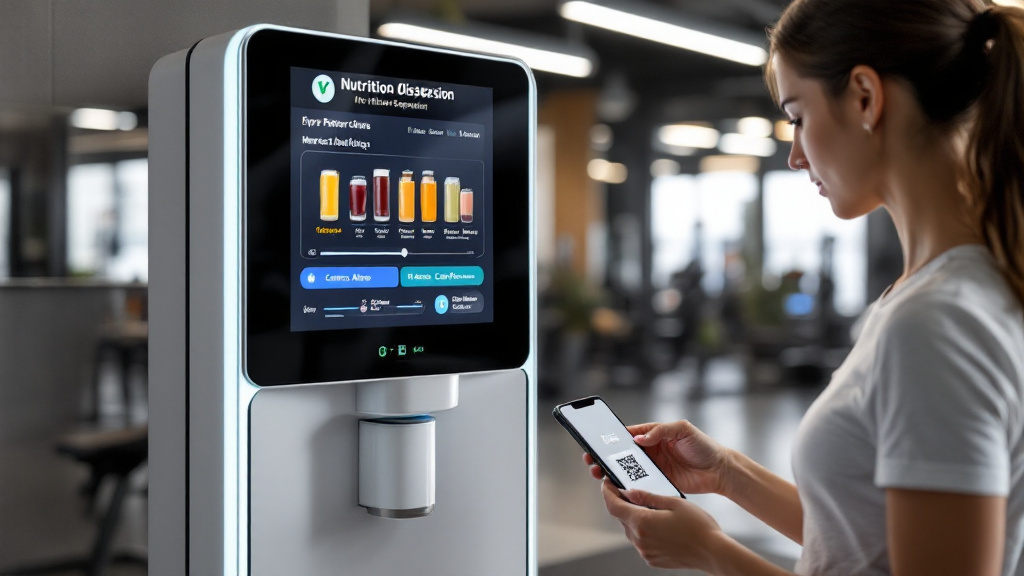
Personalization delivers ROI when it changes behavior, not just aesthetics. In gyms, campuses, and employer wellness programs, the biggest gains show up as higher utilization (more interactions per member), improved satisfaction (less “trial-and-drop”), and repeat visits that spill into broader facility usage. Think of personalization as applied consumer-behavior: the easier it is to make the “right” choice in the moment, the more consistently people follow through.
The most bankable impacts come from three levers. First, relevance: recommendations tied to goals and constraints (e.g., low sugar, caffeine cap, allergen-safe) reduce decision fatigue. Second, feedback: showing macros and ingredient transparency builds trust and repeat use. Third, consistency: a profile-driven engine creates day-to-day guidance that generic, sugary options don’t.
A practical example is a personalized nutrition station like MixMatch: users authenticate via QR/NFC, get a goal-aligned recipe, and receive a fresh drink in ~30 seconds. That’s personalization as wellness-strategy—and if it’s implemented with operational discipline, it becomes real, measurable roi for gym-operations and wellness teams.
2) A practical ROI framework: utilization, retention lift, labor saved, waste reduced
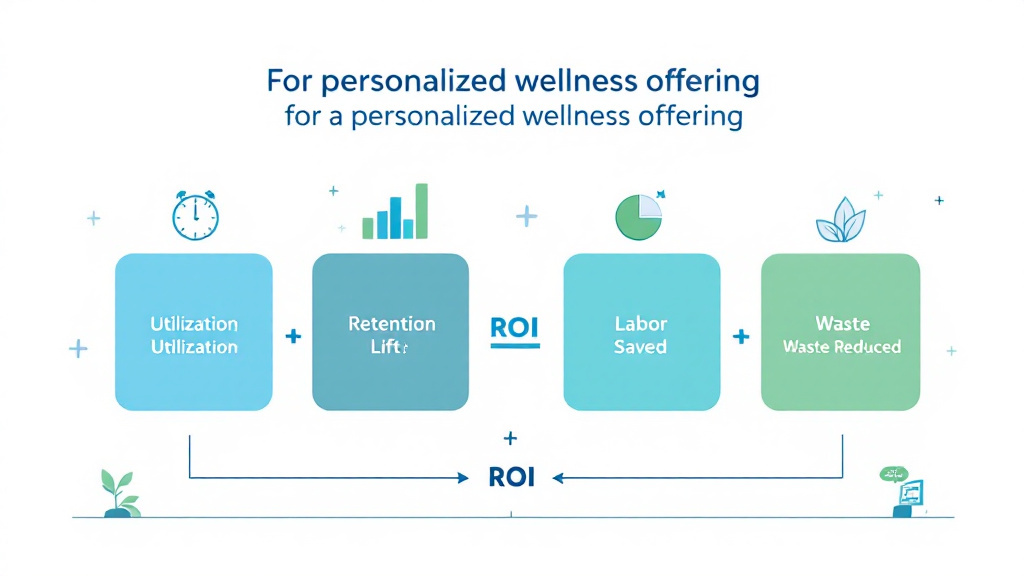
To estimate ROI for personalization initiatives, model the few variables you can measure within 30–60 days. Start with utilization: active users per day and drinks per active user. Multiply by contribution margin per serving (price minus ingredients, cartridge depreciation, and payment fees). This captures the “direct” return that decision-makers expect in commercial investigation.
Then add the “indirect” return—often larger but easier to overstate. Use a conservative retention lift assumption and tie it to real revenue: incremental member months (or employer program participation) × average monthly value × gross margin. Even a small lift matters if it’s tied to a credible mechanism (e.g., post-workout recovery personalization increases weekly visits). For employers or campuses, substitute retention with participation or satisfaction-linked outcomes you already track.
Finally, quantify operational benefits for gym-operations: labor saved from automated mixing, fewer stocking runs via telemetry, and waste reduced through cartridge-level monitoring and expiry alerts. A simple formula: ROI = (Incremental margin + Retention margin + Labor savings + Waste reduction − Fixed costs) / Fixed costs. The key is using measured baselines, not hopeful averages.
3) The pitfalls that inflate projections—and how to de-risk your rollout
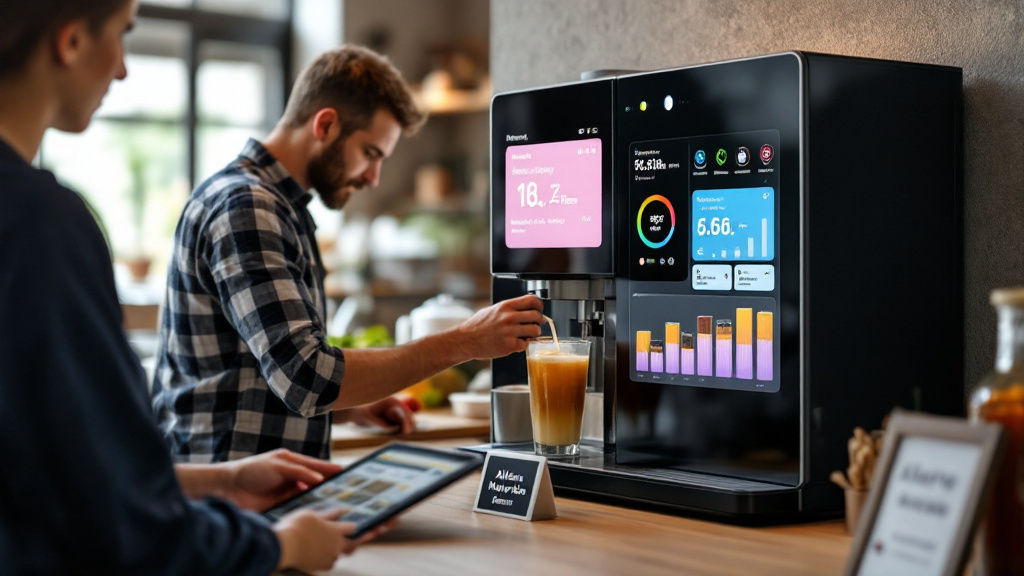
Most ROI projections get inflated in the same places: assuming adoption without reducing friction, counting “engagement” that doesn’t translate to revenue, and ignoring operational realities. If sign-in is clunky, personalization won’t scale. That’s why QR/NFC identity, fast payments, and membership integration matter as much as the recipe engine. Similarly, measuring total scans or app opens can mislead; track repeat usage, time-to-serve, and conversion from first use to weekly habit—metrics rooted in consumer-behavior.
Operational pitfalls also hide in the details: underestimated cleaning time, cartridge change frequency, and downtime. If the station isn’t consistently available, your utilization assumptions collapse. Build ROI scenarios with uptime bands (e.g., 92% vs. 98%), and include remote alerts, maintenance workflows, and compliance prompts as first-class requirements—not afterthoughts.
To de-risk, run a pilot with a clear baseline: current beverage sales, labor minutes per week, waste/spoilage rates, and member retention. Set thresholds before launch (e.g., target utilization by week 4) and only scale when the personalization-driven wellness-strategy proves durable. That’s how personalized vending becomes predictable roi, not a one-time novelty.